Featured Post -

News 1
News 2
News 3
News 4


Showing posts with label Windows 8. Show all posts

The Future Of Microsoft Is Sunny With A Chance Of Thunderstorms

Thursday, June 21, 2012 0 comments

The past few years haven’t been kind to Microsoft. (There’s no need to walk down memory lane. We all know what’s happened.) But somehow that’s all changed in the past few days. Surface andWindows Phone 8, along with Windows 8 andXbox prove there’s still some fight left in the old dog. It’s a bit premature to say that the company is back and that the decades long string of mediocrity coming out of Redmond is over but the company is clearly focused and we haven’t seenthat Microsoft in a long, long time.
The shroud of mystery surrounding the Surface announcement earlier this week in LA had the press in a tizzy. We’d all been burned one too many times and the thought of something lame being announced loomed large. It is Microsoft, after all. What they managed to pull off was nothing short of spectacular, though. Microsoft employees were kept in the dark with most finding out at the same time as press. This wasn’t a case where employees were being sheepish with details either. Most simply had no idea.
Rumors surrounding the event swirled with some being sort of right and some being flat out wrong. The reason Surface was kept under wraps so tightly has a lot to do with the company’s horizontal product line. A vertically integrated one can lead to leaks due to the number of folks involved. There’s a reason Tim Cook said at D10 that Apple would be doubling down on security. Loose lips sink ships.
Like any Microsoft announcement though, the detractors came out in full force during and after the Surface announcement. Why have a Pro model? Why not announce pricing and availability? Why not let anyone try the Touch Cover? Couldn’t agree more.
Others, however, decided to scold Microsoft for “screwing” their hardware partners. First of all, Microsoft isn’t screwing the OEMs, they’re simply challenging them to do better. Fact is, both sides have been screwing each other for decades. Microsoft is simply setting the bar and the manufacturers need to put up or shut up so long as Microsoft delivers the software. And that’s still a big if. But the OEMs only have themselves to blame. A sentiment felt by others.
Analysts quoted in a Reuters report were quick to shoot down Surface saying Microsoft needed to undercut Apple’s iPad to be competitive.
“Analysts expect the slimmer Windows 8 tablet to struggle to compete with the iPad, which offers over 225,000 apps, and to a lesser extent with Google Inc’s Android-based tablets, such as the Samsung’s Galaxy Tab.”
Maybe Reuters just doesn’t know what they’re talking about? At best, this is pretty laughable. For starters, the product isn’t finished and hasn’t shipped. And to be honest, the whole app argument doesn’t apply here. The two use-case scenarios are completely different. The Surface may be similar in form to the iPad but it’s geared towards productivity and real multi-tasking. Why do you think they slammed a keyboard into the cover? Yes, Windows 8 and the entire Windows eco-system lack the sheer volume of apps found in iOS and Android but what more do you need than email, a web browser and Office on a device like the Surface?
Whereas the iPad is clearly being used to consume content, not creating it. As hard as Apple has tried at every iPad unveil to convince developers that the hardware can drive amazing software like Garage Band, iPhoto and Pages/Numbers/Keynote, the iPad remains an entertainment focused device. When you’re making billions of dollars off other people’s work why fight the power? Just bask in its glory and reap the rewards, I say.

I enjoyed the teaser video for Surface as much as the next guy/gal but that screamed Droid/Verizon marketing. Verizon killed it with that campaign. There’s a reason why most people assume that any Android device is simply called Droid. Whoever was in charge of that video and marketing as a whole going forward for Surface really needs to think of something distinctive and unique to the Surface brand.
The excitement drummed up on Monday trickled over to today’s public acknowledgement and developer preview of Windows Phone 8. Microsoft says Channel 9 saw more views today than past events. (To be honest, they haven’t had that much exciting news to share anyway.) Some might call that positive momentum.
Windows Phone 8 signals a massive momentum shift for the unification of Windows as a whole. A shared kernel with Windows adds enough incentive for developers to build for both without even thinking about it. But this group still has an uphill battle ahead of them. To date there hasn’t been a single “hero” or flagship device for the platform. Everywhere you look across the lineup you see a blank slate of black slabs. Aside from the Lumia 900, every other device in the lineup looks like every other device in the Android lineup.
Today Microsoft revealed the roadmap for current Windows Phone device owners to upgrade to a neutered version of the next OS, Windows Phone 7.8. It didn’t have to be that way, though. By all accounts, what we were shown today is a small portion of what Windows Phone 8 is. By announcing that 7/7.5 devices might only see a new Start Screen could be equated to suicide. Why would a potential buyer go and buy a device now knowing the next crop of devices in the fall will carry an updated and arguably better OS that will likely be future proof? Way to alienate your current customers and possibly push them towards another platform this coming fall.
They should have kept mum on the whole thing or declared that every software feature in WP8 would be applicable to existing devices. At least offer developers Native Code support. Wallet is compelling enough that you don’t really need NFC to reap the benefits of what it has to offer. Announcing that the Start Screen might be the only thing that ports over was fucking stupid. Classic Microsoft. Classic.
Still, there’s hope. Microsoft has yet to finalize Windows Phone 8 and what 7.8 could be. If enough developers jump on board and create some killer speech recognition apps like this, then Siri definitely has some competition. You also have hardware partners like Nokia building out and updating apps for current Lumia owners. Future WP8 Nokia devices will also ship with Nokia Maps, which is arguably some of the best turn-by-turn navigation software available and it’s free!
Where the Finnish handset maker fell short with the Lumia 900 was the camera. AT&T and even Nokia marketing touted the Carl Zeiss lens and folks at both Microsoft and Nokia will tell you (maybe not you but I’ve heard it from both sides) how disappointing it’s been. Nokia, however, has proven thatPureView as a technology is more than capable of capturing some amazing images. You won’t see a 41-megapixel camera in the next WP8 device from Nokia but you will see the core technology coupled with Scalado (Nokia is in the process of acquiring the team and IP) in an upcoming device. HTC is also doubling down on camera enhancements so competition will hopefully drive even further innovation. I standby my previous statement that Samsung will only dabble.
What Microsoft showcased today and earlier this week proves the company has finally come to its senses. It also highlights how vulnerable they’ve made themselves by setting such high expectations. Can they deliver? We’ll see but for now I’m excited to see how the rest of this year plays out.

Windows Phone 8 Is A Great Big, Crazy, Beautiful Mess

0 comments


The Lumia 900 sold me on Windows Phone. The 900 is a marriage of fresh hardware with a fun operating system. I dig the Start Screen with the Live Tiles. There are some shortcomings. The camera sucks, to be sure, and the phone isn’t yet available on Verizon. Plus, after using the phone for several weeks, it was clear that the phone’s large screen is wasted on Windows Phone 7.5. It’s more of the same concerning the 900′s HTC cousin, the Titan II. Microsoft clearly agrees.
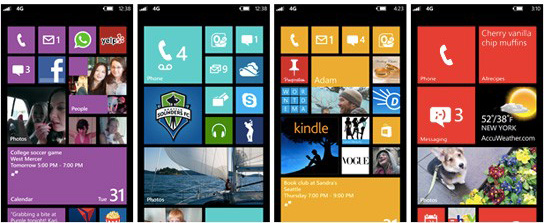
Full disclaimer: I haven’t touched a Windows Phone 8 device yet. That said, it’s hard to look at the several dozen screen shots and demo videos from today’s event and not be excited about the future of Windows Phone 8. Yes, it’s a busy interface. But my oh my the new Start Screen is – if I may – a clusterfuck of goodness.
Windows had some cojones releasing Windows 7 some 18 months ago. It was totally different. It lacked key features. It had poor hardware and carrier support. But clearly ignoring analysts, pundits and ignorant bloggers, Redmond kept at it, steadily releasing updates that solve current issues while introducing new features.
The current release, Windows 7.5, is a solid mobile platform worthy of serious consideration. Admittedly, it’s not necessarily better than Android or iOS, but rather different in key ways that make it special. And now with Windows Phone 8, and in the interim, Windows Phone 7.8, the core system might actually be better than its competitors.
The new Start Screen that will debut on some current devices with Windows Phone 7.8. The Live Tiles are now customizable, allowing owners to completely reshape their Start Screen in a grid of application shortcuts. What’s more, an upcoming SDK will allow app developers to utilize this ability and craft their respective Live Tile for different sizes and functions.
This evolution matches the industry’s trend of supersized phone screens. Why have a relatively standard grid of Live Tiles when there is so much screen real estate on new phones? Short answer: With Windows Phone 7.8 and 8, you don’t have to!
Microsoft is allowing phone owners to totally customize their phone in ways not possible with iOS and Android. All iPhones look the same but no Windows Phone 8 device will look like any other. For better or worse, this organized chaos is a result of a philosophy that has always centered around users getting tasks down quickly. The New Start Screen is just the next step towards this goal – and it’s totally fresh.
Microsoft pulled out all the stops on today’s Windows Phone 8 event. Plus, this was just a preview of the Windows Phone 8 and 7.8. More info will come later. It was a media bonanza complete with pre-briefings and the like. Microsoft is clearly proud of its new baby and wanted to show it off — just like it did two days back with the Surface unveiling. It’s also clear that Microsoft has found a new swagger. Microsoft might be back.


Microsoft Launches Windows 8 Release Preview

Thursday, May 31, 2012 0 comments


Microsoft just announced that the Windows 8 Release Preview, the company’s final pre-release version of Windows 8, is now available for download. With this release, Microsoft is also making new versions of its Windows 8 apps for Hotmail, SkyDrive an Messenger available, as well as hundreds of new and updated apps from third-party developers in the Windows Store.
Other new apps in this release include a Bing Travel app, as well as Gaming and Music Xbox apps that integrate with Microsoft’s Zune music service.
Microsoft says that it will focus its resources before launching the final version of Windows 8 on improving the installation process, security and privacy, as well as device and software compatibility. As Microsoft’s president of its Windows Division Steven Sinofsky noted, his team “will still be changing Windows 8, as we have done in past releases of Windows.”
We will be giving the Release Preview a good spin soon, but we already know that Microsoft hassignificantly improved multi-monitor support in Windows 8, for example. While this new version still features the Windows 8 Aero theme, we also know that this will be gone in the final release.
Microsoft also says that it has increased personalization options for the Start screen and refined the way “the way people find and download apps through the Windows Store.” The touch-friendly Metro version of Internet Explorer now also supports Adobe’s Flash player and features a Do Not Track feature that is turned on by default.
You can download the Release Preview installer here. If you prefer to get the Preview Release as an ISO, you can find there here.


Windows 8 Consumer Preview hits one million downloads in a day

Thursday, March 1, 2012 0 comments


How to Get Windows 8Right Now

The beautiful Windows 8 Consumer Preview is upon is, and although it's not the final version, it's getting close. This isn't just for developers—it's for you. So get downloading and start using Microsoft's amazing new beginning.
Are you already a Windows diehard? Or an Apple user, looking to see how the other half lives? Either way, we've got you covered like a thick flannel blanket. Made out of preview software.

First things first: download Windows 8

You can do that riiiii-iiight here.
Then you need to put that file on something you can install it with. That means either burning the ISO disc image to a DVD or copying it to a USB flash drive. A little annoying, but that comes with the territory when installing a separate operating system.
Whether you're using Windows or OS X, this feature is built right in.
Now let's install that sucker. (If you're prompted for an activation key, use this: DNJXJ-7XBW8-2378T-X22TX-BKG7J)

Are you on a PC?

Once you've got the Windows 8 file, you'll want to install it alongside the current version you're using—this will allow you to dip your toes in without committing, but requires some minor hard drive futzing.
If you want to run Windows 8 on its own slice of hard drive real estate, you'll need to create a disk partition—clearing out a blank space on your computer for Windows 8 to settle into. This is easy! Our pals at Lifehacker have a full guide if you need it, but you really only need to follow this:
Open the Start Menu and right click on the "Computer" option. Click "Manage", and in the window that appears, click on "Disk Management" in the left sidebar.
Find your system hard disk in the graphical list that appears in the bottom pane. Right-click on it and then click "Shrink Volume". Shrink it down so you have at least 20GB of space left on the end of the drive, and click OK. Then, click on the "Unallocated" block of that drive that appears and click "New Simple Volume". Click Next on the next few windows until you get to the "Format Partition" window. Here, give it a volume label you'll recognize (like "Windows 8") and click Next. It should format the drive for you. Now you're all set to install Windows 8.
Simple, right?
Your PC will now boot into Windows 8 by default, but if you want your previous version to auto-start, go to "Change Defaults or Choose Other Options" from the Windows 8 boot menu.
You've now got a two-headed computer.

Are you on a Mac?


Taking your Apple down the Windows trail is a little bit more complex, but not enough to keep you from going nuts. Apple has a special tool to get Windows running on your computer—Boot Camp. Guess what! It's already on your computer: Applications > Utilities > Boot Camp.
NOTE: We're encountering some problems at the office trying to get Boot Camp to create a Windows 8 installation flash drive via MacBook Air. It's possible the method that worked for the Developer build won't work for the Consumer Preview. We'll keep you updated.


Pop that open, click Continue, and select "I have already downloaded the Windows support software," create a partition for Win 8 (Boot Camp will divvy off a chunk of your hard drive for you), and then Boot Camp will walk you through the rest like installing anything else (watch this video from 3:00 onward if you need visual guidance). We promise it's an easy step. You'll automatically boot into Windows, but hold down the option key on your next restart to switch operating systems.

You're now using Windows 8. Tell us what you think.

But remember: not only is this a beta product several months away from release, it's also dramatically different from any operating system you've used before. So proceed with the knowledge that you'll volunteering to be Microsoft's guinea pig.


Windows 8 stable on ARM, going to developers soon, say sources

Sunday, January 29, 2012 0 comments


Windows 8 is stable on the ARM chip platform and will be seeded to developers soon, sources told CNET. Devices may be priced significantly less than their Intel counterparts, too.
Windows 8 on ARM should go to developers in February, said one source, who had some hands-on time with a high-profile device from a major PC maker, adding that Windows 8 was impressive and stable.

Windows 8 running on a Texas Instruments OMAP 4470 processor at CES.
"In October of last year. [Windows 8 on ARM] scared the industry because it was unstable. But what we are seeing now is quite stable," said another source, who also confirmed an expected February developer time frame.
"We haven't heard this directly from Microsoft, but we've heard this from the hardware partners that [Microsoft] is working with. We've been promised something in the February time frame," the person said.
ARM is less costly: Maybe most significantly, one source said a high-profile device that was demonstrated with fanfare at CES running on Intel chips is expected to be priced hundreds of dollars less on ARM. That device--from a top-tier PC supplier--is cosmetically identical to the Intel device, the source, who saw the ARM-based device, said.
"The bigger implication is, with [Intel-based] ultrabooks you're popularizing the idea that you have this thinner design that turns on faster, that lasts longer [battery life]--but then you have Windows 8 on ARM that's built at a price point that's much lower. And does all of those things too. This is setting up the ultrabook to head right into the teeth of their [ARM] competitor," according to the source.
ARM and Intel releases not necessarily staggered: And another potential plus for ARM: There's no reason to believe that the release of Windows 8 on ARM and Intel platforms should be "staggered," said one source, implying that the release of Windows 8 on ARM should not be later than the release of Windows 8 on Intel. The source, however, made it clear that this was his impression and not based on any official word from Microsoft. Others have claimed that Windows on ARM will be late.
Windows 8 has been characterized as the most significant Microsoft operating system upgrade since Windows 3.0. And that may not be an overstatement. For the first time, a mainstream Microsoft operating system will run on both Intel/AMD chips and ARM--the latter the most widely used chip design in the world.
The largest ARM chip suppliers today are Texas Instruments, Qualcomm, and Nvidia. Windows 8 is running stably on at least two ARM platforms, according to one source.
That's not to say there aren't plenty of lingering questions, though. One of the biggest isMicrosoft Office. Neither of the sources have seen Microsoft's killer app running on ARM, but one person said that "I'm hearing Office is fine [on ARM]."
And about those legacy apps: Then there's legacy applications, a point Intel is not bashful about bringing up since it expects this to be a compelling advantage over ARM, at least initially. "I'm not aware of any third-party legacy applications running on Windows 8 on ARM," one source said. "Of course, some of the Metro apps that Microsoft has demoed will be available on Windows on ARM. These are mostly HTML5 apps," this person said.
"That's one of the snags that Microsoft is trying to work through. You want to come out with a fairly robust library of applications," the other source said.
Both believe this is one of the reasons Microsoft is being cautious about demonstrating Windows 8 on ARM. Public demonstrations of Windows 8 on ARM at CES were of two kinds: either lifeless exhibits of devices doing next to nothing behind glass, or tightly controlled seconds-long demonstrations that revealed little.
Microsoft declined to comment.

Microsoft unveils Windows 8 -

Thursday, November 3, 2011 0 comments


At its annual developer conference in California, Microsoft gives developers an early look at its new operating system.


According to the company, Windows 8 has been redesigned "from the chipset to the experience" and now boots up in a much shorter time than its predecessor, Windows 7.
Windows unit chief Steven Sinofsky said: “We took everything that was really great about Windows 7 and we made it even better in Windows 8."
Microsoft say that the operating system will focus on applications, containing an app store for the first time and featuring a home page with colourful tiles that take the user directly into applications like Facebook.
The company has not set a schedule for the release but analysts say they are likely to aim for the back-to-school season in July next year or the following Christmas at the latest.


CrackleTech © 2011 | Designed by WetCanvas Inc.