Featured Post -

News 1
News 2
News 3
News 4


Showing posts with label Startups. Show all posts

Ex-Googlers Launch Avocado, An App For Couples Backed By Baseline, General Catalyst, And Lightspeed

Wednesday, June 20, 2012 0 comments


There’s a growing market for mobile apps designed to help couples stay closer. The phenomenon first came to my attention with thelaunch of Pair at Y Combinator’s most recent demo day. But since then, I’ve seen a whole bunch of new apps popping up, all seeking to offer up a tight little social network for two. The latest such app to launch is Avocado, which was created by a couple of former Googlers looking for a way to get closer and better organize their life together.
Avocado, available on the iPhone and Android mobile devices for $1.99, was created by ex-Google employees Chris Wetherell and Jenna Bilotta, who first met while working on Google Reader during their 20 percent time at the search giant. Key to the app is the user experience, which is designed to mimic the way that couples actually interact with each other.
It allows couples to create to-do lists and cross items off, upload pictures to share with one another, and send private messages to each other. It also lets users create and send “quick notes” to one another, over and over again, as well as “quick faces,” which swap out common emoticons for unique facial expressions of each partner.
The app is named as such because avocado trees, Wetherell tells me, only bear fruit when they grow near each other. Avocados also grow in pairs. Oh, also because “avocado” was the name of one of his computers while he worked at Google.
The Avocado team tries to differentiate itself with identity verification and advanced encryption, to ensure that users are who they say they are when they sign up. Couples have to provide a shared password to connect with one another, which is designed to keep impersonators from logging in and pretending to be someone that they’re not.
Not only are Wetherell and Bilotta founders, of course, but they’re also users — and the app has helped them get through the process of a major house renovation. Nowadays they conveniently use the app to create and manage bug reports.
The two tell me that work on the app began before the influx of social apps for couples really took hold, and the two have been a little surprised by how quickly competition has sprung up — particularly since all the major couples apps have emerged over just the last six months or so. But Wetherell said that the move to more intimate applications is only natural, as maturing platforms like Facebook and Twitter lack functionality to provide real private sharing.
To prepare for that competition in the nascent couples app space, the two closed a $1.3 million round of seed funding earlier this year, which included participation from Baseline Ventures, General Catalyst, Lightspeed Ventures, FeedBurner founder Steve Olechowski, and TV director Greg Yaitanes. The team has already hired a couple of developers, but they’re looking to hire a few more.


#neverseconds: How a school lost to a nine-year-old on Twitter

Sunday, June 17, 2012 0 comments

Friday’s Twitter meltdown in the UK is going into the public relations textbooks, you can be assured of that.
It was a perfect example of how to not only fail to adhere to your own strategy, but also to aggravate and make the situation worse.
And this whole thing erupted over school dinners. Amazing.
The short version of the story is, nine-year-old Martha Payne, a pupil at Lochgilphead Primary School in the west of Scotland had started a blog taking photos of her school meals and rating them. This became a worldwide hit, apparently, and prompted one of Scotland’s national papers, the Daily Record, to run a playful article about Martha meeting celebrity chef Nick Nairn and laughing over flaming dishes in the kitchen.
But the headline, “Time to fire the dinner ladies”, was taken the wrong way by local authority Argyll & Bute Council, who banned Martha from taking photos of her meals.
That was their first mistake: censoring a nine-year-old who probably has more popularity on the web than many newspapers these days.
There's nothing wrong with encouraging that level of technical skill in a child, at all, nor the creativity involved. AFP
So that prompted the first part of the Twitter backlash, using the hashtag #neverseconds, the name of Martha’s blog. And then, just before 11am, came the council’s second mistake – a press release so ill judged, I’m sure every PR instructor on the planet now has a copy, though it has been taken down off the council’s website.
Their reaction was clearly against the newspaper article, but looked as though it was against Martha. And it was full of basic grammar mistakes.
They even managed to spell “dessert” wrong. So, the authority in charge of local education, in defending their school meals, can’t spell the words for those meals? Priceless.
It started: “Argyll and Bute Council wholly refutes the unwarranted attacks on its schools catering service which culminated in national press headlines which have led catering staff to fear for their jobs.
The Council has directly avoided any criticism of anyone involved in the ‘never seconds’ blog for obvious reasons despite a strongly held view that the information presented in it misrepresented the options and choices available to pupils however this escalation means we had to act to protect staff from the distress and harm it was causing. In particular, the photographic images uploaded appear to only represent a fraction of the choices available to pupils, so a decision has been made by the council to stop photos being taken in the school canteen.”
As everyone online pointed out, this is a nine-year-old girl.
At this point, #neverseconds was trending top in the UK, with “Argyll and Bute” and “Martha Payne” hovering nearby. Throughout all this, Martha also had a charity page set up to raise funds for Mary’s Meals which provides meals in African communities and helps build kitchens.
Martha (officially, though certainly with parental help) set a goal of £7000, the cost of one school kitchen in Malawi or elsewhere. Within hours, she had enough for more than five. Currently there’s enough for 10.
By 1pm, the elected councillor who is leader of Argyll and Bute was on BBC Radio 4 and said he ordered a reversal of the ban on Martha taking photos. It tried to praise her and her “entrepreneurial” spirit, but mostly the council had become a laughing stock. The Twitterati claimed victory for Martha, who was silent throughout the day because she was at school, presumably oblivious to what was going on. Plus, nine-year-old tend not to tweet that much. If she did, it would no doubt put the council to shame in maturity, and spelling ability.
What conclusions can we draw from this textbook example?
1. Never turn a nine-year-old girl into your opponent. Even if the problem was her dad, for example, you don’t allow public attention to go to the child. You’ll never win public sympathy that way.
2. When being bombarded by critical tweets, don’t react with a link to a press release you’ve not properly thought out.
3. When in doubt, refer to your own social media policy, presented at a conference the year before.
An alleged slide from the council’s chief communications officer on responding to blogs states that, in reaction to “unhappy customers”, you should “restore reputations – rectify the situation, respond and act on a solution”. You can see the chart here,  and background on that officer here —she reportedly had staff set up secondary social media accounts to “spy” on critics of the council.
I’m always skeptical when people declare that social media won revolutions in the Arab world, or helped the Occupy movement, etc. It suits people who use the technology to believe they’re personally to thank for, helping something half a world away.
In this case however, Twitter fed a backlash, which prompted the press release, which added fuel to the backlash. The web could react far quicker than any other media in such a situation. In fact, there was no point writing much about it all until the U-turn within hours. This story largely operated within the Twittersphere and the PR attempts to react failed miserably.
Should all schools be at the mercy of blogging nine-year-old girls? No.
They are still young and impressionable and may not be able to understand complexities such as education budgets, the food supply, or even the potential risks of being a global attraction as a child.
By all accounts, the school worked very well with Martha on this blog.
There’s nothing wrong with encouraging that level of technical skill in a child, at all, nor the creativity involved. Teachers, parents and others can work with the young person to see the different aspects of being a blogger, and still being a pupil.
Argyll and Bute’s PR machine and administrators didn’t seem to do that, or didn’t do it very well. Perhaps someone will send them a textbook on public relations and they can read up on the chapter about #neverseconds
— and never repeat their mistakes again.

Move Over Harvard And MIT, Stanford Has The Real “Revolution In Education”

Thursday, May 10, 2012 0 comments


Lectures are often the least educational aspect of college; I know, I’ve taught college seniors and witnessed how little students learn during their four years in higher education. So, while it’s noble that MIT and Harvard are opening their otherwise exclusive lecture content to the public with EdX, hanging a webcam inside of a classroom is a not a “revolution in education”.
A revolution in education would be replacing lectures with the Khan Academy and dedicating class time to hands-on learning, which is exactly what Stanford’s medical school proposed last week. Stanford realizes that great education comes from being surrounded by inspiring peers, being coached by world-class thinkers, and spending time solving actual problems.
To give a little background, last week, Harvard and MIT made headlines with the launch of EdX, a joint online education initiative that will place lectures from the best instructors online, complete with reading material, automated quizzes, wiki-style forums, and a tailored assessment of progress. Essentially, EdX slightly expands the existing MIT OpenCourseWare with some basic forum and feedback technology–technology that has been around since the dial-up days of the late 90′s (and what universities have had since the invention of the Scantron). MIT OpenCourseWare has been wildly popular, with over 125 million lifetime visitors; so, the new EdX will certainly be useful for the existing base of MIT students who use it in deciding their course schedule and those in the public who want to enhance a neatly organized syllabus of readings with some occasional online chats.
But, saying that EdX is “the biggest change in education since the invention of the printing press” ignores the fact that lectures are often the least educational aspect of college: after four years of instruction, research shows that many students haven’t mastered basic reasoning or communication skills. Students forget most of what they hear in lecture and then only recall 40% of the tested material two years later. Lectures do little for students actually enrolled in the school, let alone the millions of online users who will study part-time, without a supportive community or frequent feedback from a professor.
So, last week, two Stanford professors made a courageous proposal to ditch lectures in the medical school. “For most of the 20th century, lectures provided an efficient way to transfer knowledge, But in an era with a perfect video-delivery platform — one that serves up billions of YouTube views and millions of TED Talks on such things as technology, entertainment, and design — why would anyone waste precious class time on a lecture?,” write Associate Medical School dean, Charles Prober and business professor, Chip Heath, in The New England Journal of Medicine. Instead, they call for an embrace of the “flipped” classroom, where students review Khan Academy’s YouTube lectures at home and solve problems alongside professors in the classroom. Students seem to love the idea: when Stanford piloted the flipped classroom in a Biochemistry course, attendance ballooned from roughly 30% to 80%.
Skeptical readers may argue that Khan Academy can’t compete with lectures from the world’s great thinkers. In response, Prober and Heath point to a recent one-week study that compared the outcomes of two classes, a control class that received a lecture from a Nobel Prize-winning physicist and an experimental section where students worked with graduate assistants to solve physics problems. Test scores for the experimental group (non-lecture) was nearly double that of the control section (41% to 74%).
“Students are being taught roughly the same way they were taught when the Wright brothers were tinkering at Kitty Hawk,” they explain. After a revolution, an organization should bear little resemblance to its former self. Harvard and MIT have merely placed the 20th century education model online. Stanford, on the other hand, is completely doing away with the old model of the “sage on the stage” and embracing a learning environment that mirrors life forever connected to the world’s information.
[Image via the University of Waterloo.]

Smart Education: How Lynda.com Hit $70M In Revenue Without A Penny From Investors

0 comments


As Ned Flanders would say, education in the U.S. is in “a dilly of a pickle.” At the risk of sounding like a broken record, the cost of education has become unsustainable. Student loan debt is over $1 trillion, unemployment remains high for the recently graduated, and non-traditional students — older people, single mothers, workers looking to re-train — are returning to academia and learning programs in droves, putting even more competitive pressure on already-scant on-site resources. Higher ed institutions struggle with the cost of expanding to meet demand. Yale, for example, recently decided to add 250 students to its incoming class, which came with a price tag of a quarter of a billion dollars.
Luckily, a number of startups are tackling the problem, which, along with the maturation of online content distribution channels, are helping to lower the cost of higher, primary, and continuing education — both making it easier for teachers to do what they do best as well as transforming learning into something that’s more engaging and personalized for students. Startups like Khan Academy, 2tor, ShowMe, Udemy, Udacity, Grockit, Coursera, and StraighterLine are all beginning to show how easy it is to flip the educational process — in other words, to use video and advanced web platforms to make learning more affordable and effective.
However, while these startups should be recognized for their mission-driven approaches, some of these startups evidence undercooked business models, obviously a problem for for-profit businesses when the funding (if there is any) dries up. There’s also plenty of money to go around in Silicon Valley right now, and many startups have become way too focused on raising seed and Series A financing, which can be detrimental to the system and a distraction for founders.
That’s why the story of Lynda.com has such relevance in today’s landscape. Founded in the ’90s, the company is, compared to the slew of year-old edtech startups, an old-hand. For those unfamiliar, Lynda.com offers a virtual video library of over 1,200 educational, how-to videos. Unlike the awesome Khan Academy, Lynda’s video courses are taught by industry experts, working professionals, and veteran teachers, served up in installments for a monthly subscription fee of about $25.
In 2010, Lynda delivered over 1,000 hours of content, and while it provides its paid online learning content to individuals, today it also works with nearly all of the Ivy League schools as well as companies, like Disney, Time Warner, Sony, Pixar, ABC, and HBO to supplement their learning content. What’s also different about Lynda, and perhaps old-school given today’s emerging DIY online video models, is that it produces 90 percent of its content in-house. It’s a big video production operation beyond simply being an online distribution platform.
Since the beginning, Lynda.com has been focused on tech content, offering how-to videos on some of the most popular apps from Adobe, Apple, Autodesk, and Microsoft — on everything from web design to learning to use Excel in a way that doesn’t make you want to blow your brains out.
Content companies have struggled to monetize on the Web, and there has been plenty of debate over the effectiveness of paywalls. Newspapers are finally starting to see growth in their circulations, and ABC’s figure for daily Times paid digital subscribers was 807,000, with the WSJ in second at 552,288. Of course, as the NYTimes points out, under audit rules, newspapers can count paid digital subscribers more than once if they have access to multiple platforms, like apps, tablets, etc.
This means that, as a content company, Lynda.com is looking pretty good in comparison. Yes, the Times’ digital offerings are much younger, but Lynda currently has over 1 million paying members and saw 42 million uniques over the last 12 months — a 20 percent increase from the year prior. That’s not mind blowing, as there are a number of digital publications and blogs that see that much unique traffic in a month, rather than a year. But the real kicker is that Lynda hit $70 million in revenues in 2011.
Co-founders (and couple) Lynda Weinman and Bruce Heavin started by sinking $20K from their savings into Lynda. They were profitable, Heavin says, within a few weeks, and they haven’t taken a penny of outside funding since. And that’s not for lack of offers, as both founders hinted that sizable investment offers have been put on the table on a number of occasions. But the company has been content to fly under the radar and rely on word-of-mouth marketing, subscribing to a “if you don’t need money, don’t take it” policy.
The real key to the company’s success is how it’s become an alternative to the Demand Medias and eHows of the world. Lynda.com won’t blow you away with shiny graphics or interactivity, its videos often do a lot of screen-sharing, with narration from experts laid over it. But, as the company now has some-300 employees and has an increasingly professional studio north of Los Angeles, the production quality of its videos is high.
Compared to Khan, YouTube how-tos, or eHow, Lynda’s videos are offered in installments, and depending on what users want to learn, they can graduate to more advanced content as they move up the ladder. For example, Lynda is about to publish its 500th course on Adobe apps and software, which is ridiculous. CS6 begins shipping on Monday, and Lynda already has courses for the creative suite ready to go.
These courses on advanced PhotoShop, for example, may include up to 10 hours of content, broken down into 60-odd subgroups. While it’s not true for every subject, Lynda.com can be as basic or as advanced as you’re willing to go. And, with the growing interest in programming and coding education, the buzz around CodeAcademy being one example, the company is beginning to get very serious about expanding and diversifying its content around programming languages and web development.
For educators and teachers, part of the appeal of Lynda is that they’re guaranteed a paycheck for the content they help produce. Since Lynda herself is a veteran of the publishing industry, the site’s compensation model is not unlike which one finds in book deals. Once teachers are vetted (and the co-founders told me they find more than 50 percent of the time that authors don’t necessarily make great teachers), they’re given an advance for their work. From there, the company offers a cut of revenues depending on the popularity of their videos.
Even if the videos don’t blow up, the teachers are guaranteed that supplementary revenue stream. But, somewhat surprisingly, the co-founders tell us that nearly 90 percent of its educators earn their entire annual income by producing videos for Lynda.com.
In the end, having been able to weather the stampede of content producers to the Web, and grow its business to $70 million in revenues, it seems that its founders might have some valuable perspective for startups and young entrepreneurs looking to do the same. Like many others, the co-founders began the process with other income streams, and it took almost 5 years before its online content was outpacing the number of courses they themselves were teaching in the classroom.
But what they kept coming back to was the fact that they started their business not as eager young people looking to get rich quick or find some niche to exploit, like becoming the Airbnb for pets, they were experts — and they were passionate about education. Weinman herself had been working in web design and film special effects, along with teaching, for years — and had published several books.
The co-founders attribute the success of Lynda.com to becoming industry insiders before becoming entrepreneurs, and on focusing on the product before profit. Allow your customers to keep you honest, they said, and listen to their feedback to help push your business forward. Early on, everything they had and made was poured into Lynda.com. As Heavin said, it took years of “walking through the desert,” before they were able to see any real profit, but being passionate about finding better ways to educate people using online tools, and taking into account the modalities of learning — being intimately familiar with their user or target customer — can lead to a positive result.
As to what’s next, Lynda.com just added a course queue so that users can keep track of and save subjects or chapters they’re interested in watching later and will be continuing the expansion of its educational content for developers. And, since 20 percent of its users are international and its content is presently English-only, the company hopes to eventually begin translating its videos into other languages. Hopefully sooner rather than later.

Y Combinator-Backed Swiftype Builds Site Search That Doesn’t Suck

0 comments

In my four-plus years covering tech, I don’t think I’ve ever met another blogger who was happy with the search feature on their website. The options range from terrible to functional, but it’s never good, and I’ve always found that it’s easier to just search via Google.
Apparently Matt Riley and Quin Hoxie saw the same problem when they were working at Scribd. So they left to build a better website search engine, one that they’re calling Swiftype. The startup was part of Y Combinator’s latest class of companies, and it’s launching today.
What makes Swiftype better? For starters, Riley and Hoxie say that unlike Google Site Search, it’s not just taking Google’s global web rankings and filtering them for one website. Instead, it builds (in Hoxie’s words) “a PageRank that’s specific to individual websites.” So it looks at the signals of importance on your website and prioritizes content accordingly. For example, if you link to anything from your front page, that’s a pretty big signal that it’s important to you and should be ranked highly.
On top of that, Swiftype also allows site owners to pin and unpin different items to the top of their search results. If you’re a news site, that might mean pinning the most popular and best articles, or it might mean promoting content that’s related to an ongoing sponsorship campaign. And Swiftype offers a set of tags that publishers can include in their pages to show which content should be surfaced in the results.
Other features include analytics data and auto-complete for people typing in their search.
Riley and Hoxie showed me the process of creating an engine for your site. You point Swiftype at the URL, and it crawls the site multiple times, refining the results as it goes. Then you can adjust the rankings to your liking, choose from a couple of different layouts, and finally grab some code to add to your site. (Among other things, Swiftype is supposedly easy to integrate with Tumblr — our own MG Siegler has added it to his blog ParisLemon.) In other words, there’s virtually no technical work required from the publisher — something else that distinguishes Swiftype from the various other search products and open source libraries out there. At same time, companies who want a little more control can access Swiftype through its APIs.
Swiftype has been working with a few beta customers, including Twilio, TwitchTV, Parse, Listia, and Fastly. These are technically sophisticated companies, so it’s not like they couldn’t build their own search features, but Riley says they realize it’s “not their core competency,” so they’re looking for something like Swiftype that’s “dead simple to use.”

New Stanford Startup Generator: FounderSoup

Sunday, January 29, 2012 0 comments

A single entrepreneur alone is vulnerable to shortsightedness, to fatigue. But with a team comes diverse perspective, encouragement, and the wherewithal to push through problems. That’s why a group of Stanford computer science and business students started the Andreessen Horowitz-backed FounderSoup program. It’s designed to give entrepreneurs with an idea or a fledgling company a chance to pitch — not to raise funding, but to recruit co-founders.
At its first full-scale event on Thursday night, I watched as 20 ideas were pitched, and 170 PhD, MBA, and undergraduate students mingled. What I saw was an effective model for fostering startups, and several brilliant ideas in healthtech and energy (reviewed below) that could turn into successful companies.
FounderSoup’s President Mike Dorsey tells me “As a CS student and an MBA, I would constantly get questions from entrepreneurs to connect them to people with coding skills. I’d also get all these coders with great products who needed business co-founders.” Dorsey and some friends started the program to help founders meet, thanks to financial backing from Andreessen Horowitz via partnerRonny Conway (son of Ron).
At the Founder Soup pilot event, 4 teams discovered co-founders and 2 went on to receive funding. Clearly there was potential. For Thursday, 50 founders submitted ideas and 20 were given the chance to pitch for 90 seconds each. Afterwards, each team was stationed around the Stanford d.school and approached by those interested in joining their team. To ease networking, FounderSoup made temporary business cards for all attendees with their contact info and specialties.
Some startup-spawning universities are beginning to set up their own VC funds, accelerators, and incubators, like Harvard’s new Experiment Fund and Stanford’s StartX. Before young companies can take funding or stipends, they need a great team, though. More universities and cities should look to copy the FounderSoup model. It’s simple, cheap, and in a school’s interest. After all, nothing brings in top applicants and alumni donations like producing the next Larry Page, Vinod Khosla, or Jerry Yang.
Here’s a quick look at the most exciting companies from FounderSoup, you can also watch their pitches here
Wello – An online marketplace where fitness professionals can deliver training sessions via live streaming video. Trainers pay to set up a profile, sell one-on-one or group training sessions, and Wello processes the transactions and takes a cut. There’s big potential because many who want to get fit don’t have time to go to a gym, but can easily slot in video sessions while at the home or office. Customers say the webcam-based workouts are effective.
Wello could grab a share of the $21 billion a year onsite fitness services market, in which millions of people already pay for gym memberships and expensive in-person physical trainers. Oxford, Stanford, and Johns Hopkins-educated Co-founder Leslie Silverglide previously co-founded and sold Mixt Greens, a quick-service restaurant group, to Nestle’s investment arm.
D.C. Revolutions - Helix-shaped, 3 foot tall plastic wind turbines that fit on light poles and can produce half the energy the lights need. D.C. Revolutions could sell the turbines to cities or property owners. Eye-catching when they spin, the turbines could change the face of the urban landscape and as founder Durrell Coleman says, “make sustainability sexy”.
CS LabTech’s MuSE - A healthtech company that has developed MuSE, a cell-stretching petri dish medical research device for labs. Currently when labs test cells they’re taken out of the body and are therefore in a static state, different from their dynamic state inside a live body where they stretch while in use. CS LabTech’s vacuum-powered Multi-dimensional Strain Experiment petri dish allows biologists to mimic the dynamic state of heart, lung, muscle, and other cells within the lab. Founded by dynamic cell structure PhD Chelsey Simmons, CS LabTech’s device will be ready for commercial sale next month, and could power advancements in the lucrative fields of drug screening and pharmaceutical development.
Crowd Jewel- A crowdsourced jewelry design and sales company. Designers submit their work through a Facebook app where potential customers then vote and pre-order, and the winners’ designs are commissioned and delivered with CrowdJewel taking 30% cut. Since designers want the exposure and sales that come with winning a contest, they source sales leads for CrowdJewel by encouraging their friends to vote. With a big market and lots of struggling designers, CrowdJewel could attain some of the success of similar businesses like Threadless and BeachMint.
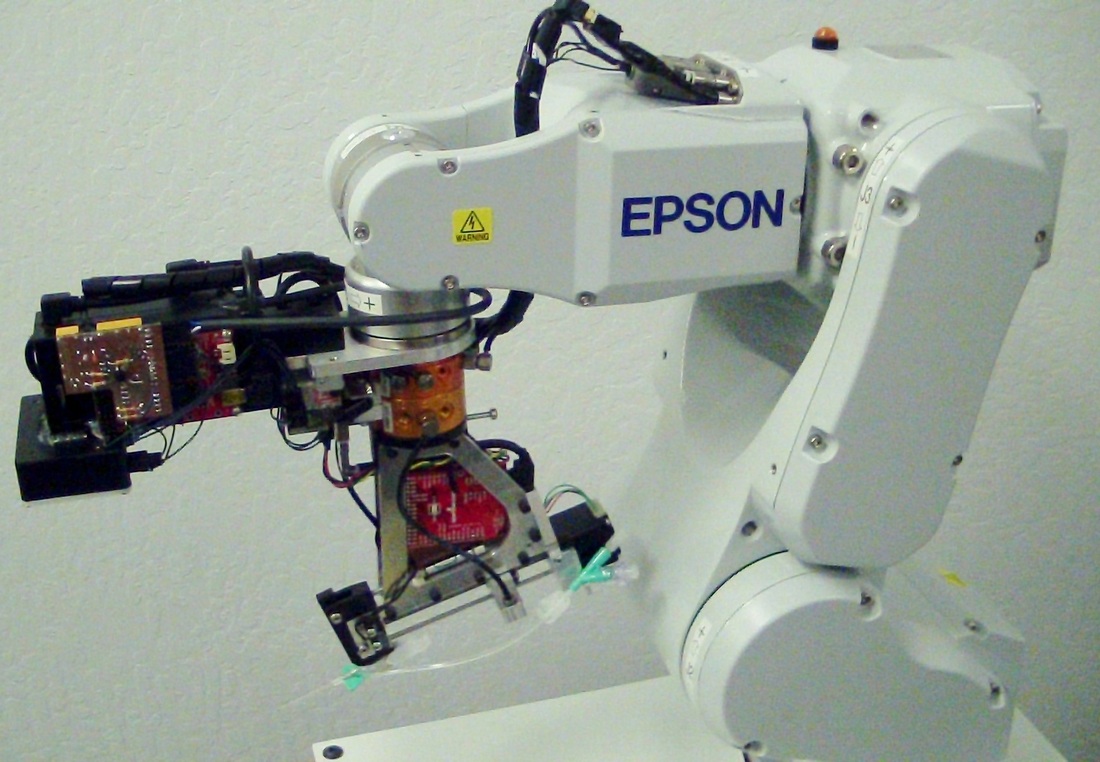
Veebot- A vein puncture medical robot that automatically finds a patient’s vein, inserts the needle, and performs a procedure. Co-founder Richard Harris tells me there are 1.4 billion venipuncture procedures per year in the US alone, and 33% fail to find a vein on their first attempt. This forces doctors to make multiple manual needle pricks that can up the risk of infection and complication, as well is increase costs and delay medical treatment.
Veebot solves the problem using infrared to initially locate a vein, then ultrasound to pinpoint it. Veebot can then draw blood, insert an IV, or administer medicine. Venipuncture is a $30 billion per year global market, and this is a massively disruptive device every hospital in the world could use. While some might be scared of a needle-wielding robot, I’d be happy to submit if it saved me from multiple pricks.

As Millions Of Consumers Unwrapped Kindle Fires Over Christmas, Mobile Ad Impressions Spiked 261 Percent

Saturday, December 31, 2011 0 comments

In November, Mobile ad network Millennial Media reported that Amazon’s new tablet devices Kindle Fire, was seeing ad impressions grow at an average daily rate of 19% since its launch to the public in the middle of the month. Millennial says it’s not just seeing millions of impressions and the device is on a monthly run rate of hundreds of millions of impressions. But that data was gathered from a few weeks of usage from consumers in November, and as Amazon reported yesterday, December’s holiday season brought record sales for the Kindle Fire, with over 4 million Kindle devices sold in December. The Kindle Fire was the most gifted and wished for product on Amazon this season.

Today, Millennial is releasing data from its ad network showing impressive growth numbers from the Kindle Fire over the holiday weekend. In November, impressions on the Kindle Fire grew an average rate of 19 percent every day. Over this past weekend, Millennial says that as consumers opened and used their new Kindle Fires, ad impressions increased even more. As millions of consumers unwrapped new Kindle Fires, Millennial saw an average daily growth rate of 113 percent.

On December 24, impressions grew 32 percent; and on Christmas day in particular, impressions on the Kindle Fire grew 261 percent. The day after Christmas saw a 46 percent jump in ad impressions.


Of course, the Kindle Fire wasn’t the only tablet that saw a spike from the holidays. From December 23 to 26, the iPad had a daily growth rate of 6 percent. The iPad remained the leading tablet overall on Millennial’s platform during this time period, although the massive gain from the Kindle Fire helped to significantly close the gap.

The Kindle Fire’s impression growth on the platform has slightly outpaced that of the iPad when the iPad launched in early 2010. Millennial says that though the Kindle Fire has been introduced into a more mature tablet market than the market which greeted the original iPad, Amazon’s entertainment-focused platform and the lower price point have helped drive this early use by consumers.

Now that the holiday gifting season if over, it should be interesting to see if consumer usage of the Kindle Fire continues to grow at such a rapid pace. For example, the release of a new version of the iPad could effect Kindle Fire growth in 2012.


2011 - The Year In Tech

0 comments

Okay, last workday of the year. It’s nostalgia time. Let’s take a quick glance in the rearview mirror at the year in Tech, before we speed forward again in 2012. There were defining moments, epic battles, new product introductions, and major corporate screw-ups. Mobile and social drove many of the changes in tech, and we’ve certainly gone through our own major transition here at TechCrunch (but I’ll save that for another post). Below is our list of 11 events in tech that made 2011 memorable.

1. End Of An Era: Steve Jobs Passes Away

The defining moment of 2011 which transcended tech was the passing of Steve Jobs. It shook the world not because it was unexpected, but because Jobs was at the height of his creative arc and his work was far from finished. He had pulled the tech industry into the post-PC era with the iPhone and iPad leading the charge, and the rest of the industry following. But Jobs always liked to surprise people with “one more thing,” and he set up Apple to keep creating those things far into the future. It is telling that his last public appearance was in front of the Cupertino City Council outlining his plans for a futuristic new Apple headquarters. (Other tech luminaries no longer with us include Dennis Ritchie, Bob Galvin, and Ken Olsen).

2. Google Goes Social

After many previous half-hearted attempts to take on Facebook, Google finally got serious about social in 2011 with the launch of Google+. Larry Page, who took over as CEO this year from Eric Schmidt, put it front and center by weaving it into Google’s other products and pushing it to an estimated 65 million people. With its Circles and Hangouts, G+ is forging its own distinct identity. The more that social threatens search as the way people find things in the Web, the more important G+ will become to Google.
 
3. The Kindle Lights A Fire

Amazon entered the tablet race this year with the Kindle Fire, a media tablet based on Android that serves as a window into all the digital media Amazon is trying to sell us—books, movies, music, apps. The $200 Kindle Fire is the best-selling Android tablet out there. Amazon sold more than 4 million total Kindles over the holidays (including the E-Ink versions). Amazon just wants to get as many Kindle Fires into people’s hands as possible so that it can deliver digital books, movies, and apps right into our hands.

4. The Year Of The Pivot

The one thing startup founders learn very quickly is that failure is okay as long as they learn from it. With the cost to create a product lower than ever before, lean startups can afford to try again. This is known as the “pivot,” an over-used term which became a survival strategy for some, even fat startups (see, Color). The two most successful pivots which come to mind are Turntable.fm (formerly Sticky Bits) and Fab.com (which went from gay social network to design-oriented e-commerce site).

5. Netflix Screws Up

This was a tough year for Netflix. Its stock went from $300 to $70 as it tried to speed its transition from a DVD rentals business to streaming online video. Along the way, it introduced price hikes to some of its customers and tried to split off its DVD-by-mail business before backing off and apologizing to customers. (Although, the price hikes remained). Viewers are spending more time watching Netflix movies streamed over the Internet, but the company still has a lot of work to do to repair its once-shiny brand image.

6. Tech IPOs Come Back (Sort Of)

After several years of almost no activity, 2011 was a big year for tech IPOs. We had LinkedIn, Pandora, Groupon, Yandex, and Zynga. And don’t forget about Chinese Internet IPOs like Tudou and Renren. Most of these didn’t perform that well for public investors after initial pops, and even some private investors got burned (Zynga priced below its last private round). Now all eyes are on Facebook, which is planning to IPO in 2012.

7. The Private Billion-Dollar Club Gets Bigger

One reason tech IPOs aren’t performing so well is that much of growth in value is now captured before the IPO by private investors. Tech companies are pushing off going public further and further into the future, and raising huge rounds of funding from the same types of growth investors—DST, T-Rowe Price, Fidelity—who a dozen years ago would have waited for an IPO. As a result, many private tech companies are raising money at $1 billion valuations. We saw this trend take off in 2011 with Airbnb, Dropbox, Gilt Groupe, Square, and Spotify. And it’s not limited just to the U.S.

8. Google Buys Motorola, Microsoft Buys Skype, And Other Big Deals

2011 wasn’t just a big year for IPOs, it was also a big year for M&A. While the biggest tech deal of the year, AT&T’s proposed $39 billion merger with T-Mobile, was squashed by the government on antitrust grounds, some of the biggest tech deals of the last decade did go through. Google bought Motorola Mobility for $12.5 billion, Microsoft called in Skype for $8.5 billion, and eBay acquired GSICommerce for $2.4 billion. Other notable large deals included HP-Autonomy ($10.2 billion), RightNow-Oracle $1.5 billion), PopCap-Electronic Arts ($1.3 billion), ITA Software-Google ($700 million), Anobit Technologies-Apple ($450 million), Admeld-Google ($400 million), Efficient Frontier-Adobe ($400 million), Radian6-Salesforce ($326 million), Huffington Post-AOL ($315 million), and Kobo-Rakuten ($315 million).

9. The Patent Wars Get Ugly

The patent system is broken. Patents are increasingly used to block innovation in courtrooms rather than create innovations in the marketplace, and we saw this problem reach epic proportions in 2011. Patent trolls continued to extort tech companies large and small. But the patent wars spilled over to the major industry players themselves as everyone pointed their patent arsenals at Android. In July, Google failed to win a bid for more than 6,000 of Nortel’s patents, which went to an anti-Google consortium for $4.5 billion. Google responded by buying patent-rich Motorola Mobility for $12.5 billion. Microsoft started demanding patent licensing fees from Android handset manufacturers, which led to a very public tussle with Google which never seemed to end. And Apple did its part by continuing to sue Android manufacturers, including HTC and Samsung, for patent infringement. It’s a mess.

10. Android And Apple Win The Mobile Internet

All of this fighting is for a very high stakes game—the future of computing, which is mobile. Apple and Android emerged as the two superpowers of the mobile Internet (with 76 percent combined mobile OS share in the U.S.). RIM is in shambles. Windows Phone is still nowhere to be seen (except in TechCrunch writer Robin’s pocket). So far, tablets are all iPad, but the Kindle Fire is coming out punching to become a serious contender.

11. Social Media Fuels Social Protests

Whether it was the Arab Spring or Occupy Wall Street, social protest movements around the world were fueled by social media like Twitter and Facebook. Protesters self-organized using Twitter, Facebook, mobile phones and any other communications system available to them, which also functioned as a way to broadcast the protests around the world. These realtime technologies make it much easier to start revolutions, but they don’t make it any easier to finish them.

How a startup is cracking the Indian solar market !!

Saturday, December 17, 2011 0 comments

“It’s year one for solar in India,” says Alan Rosling, Chairman and Executive Director of Kiran Energy, a solar developer startup based in Mumbai. But despite the early stage and small size of the crew at Kiran Energy — the company is two years old, has 25 employees and $50 million in funding from U.S. private equity firms — Kiran is determined to play a significant role in financing, owning and developing large scale solar panel farms in India.


Kiran hits it big -

During an interview this week in Kiran Energy’s Mumbai office, Rosling told me how Kiran has for the moment become “the biggest focused solar power developer” in terms of contracts in India. There’s other large conglomerates or power companies that have potentially larger portfolios but Kiran is currently the leader in terms of the solar-specific folks, says Rosling.

Kiran has 75 MW worth of solar contracts, including 50 MW that the company won just weeks ago in the latest Indian government solar auction (which Rosling called “nail-biting” and “exciting.”) The government has been bidding out projects under a goal to deliver 3 percent of the country’s power via solar by 2022 — that could eventually be 25 GW. Individual states also have their own solar plans and Kiran has a 5 MW project with the state of Rajasthan.

Kiran is just starting to hit it big. The company will open its first plant this month and also managed to score a joint venture with Indian conglomerate Mahindra called Mahindra Solar One, of which Kiran is a majority owner. “When we signed the contract for the JV with Mahindra we were just two guys,” says Rosling.

Rosling’s counterpart is founder Ardeshir Contractor, formerly the head of KPMG’s Investment Banking business in India. Rosling, a former Executive Director of Tata Sons, tells me that Contractor came to him with the idea for Kiran and persuaded him with the pitch about the business model and the potentially massive size of the Indian solar market.

In a market that could potentially be controlled by Indian conglomerates and family businesses, Rosling emphasized that Kiran Energy is “professional” and “thinks corporately,” which is why Mahindra wanted to partner with them.”We are playing above our weight,” says Rosling.

Indian solar market

The Indian solar market only had 54 MW installed in 2010 and is expected to jump to 3 GW by 2016, according to the researchers at Greentech Media. That’s the equivalent of zero to 60 in a blink of an eye, and a variety of players have emerged over the past couple of years to try to play in this potentially huge market.

Rosling says he sees four types of players that Kiran competes with: 1). large power companies like Tata Power, 2). Indian conglomerates, 3). foreign solar developers like SunEdison, and 4). pure play Indian solar companies like Kiran. The latter also includes direct competitors Azure Power in New Delhi and SunBorne Energy in Haryana.

Right now the Indian solar market is being driven by the government mandate, and solar is about double the cost of wind in India. Kiran’s latest contract for its 50 MW project is for 9.34 rupees a kilowatt hour. That’s pretty low compared to contracts a year ago, but wind, the cheapest clean power available in India, is closer to between 3 and 5 rupees a kilowatt hour.

But those economics will likely change over the next few years. The cost for our solar projects dropped by 40 percent in 2011, says Rosling. The price of solar panels has plummeted this year, and while that has caused many solar manufacturers to struggle, that’s been great news for solar developers. And down the road eventually most think the economics for centralized solar PV farms will work without government mandates.

Part of that is because India is hungry for any kind of power — clean or dirty. Along with India’s rapidly growing GDP comes the population’s growing desire to consume more energy. There are regular rolling black outs due to the constrained supply of electricity in many cities and many Indians have no access to grid power at all.

“India is one of the few countries in the world where there’s demand for power, there’s land, and there’s sunshine. India is going to be an absolutely huge solar market,” says Rosling.

U.S. solar in India

Kiran’s investors include $50 million raised from U.S. private equity firms Bessemer Venture Partners, New Silk Route Partners and Argonaut Ventures — and yes, Argonaut is the firm that popped up in the media this year for backing now bankrupt solar panel maker Solyndra. It is widely agreed upon that solar project developers are significantly less risky of an investment compared to solar manufacturers.

Kiran’s Series A funding round will take them through 2011 and 2012, says Rosling. But the company will be raising more funds to scale up and to finance more plants.

Kiran is also working with some U.S. solar makers for its contracts. Kiran went with SunPower for a 5 MW project, Japanese company Sharp for 20 MW, and the contractor for the recently won 50 MW is yet to be disclosed, but Rosling says Kiran is talking to some U.S. companies.

Over the next three years Kiran Energy wants to build projects of 200 MW, says Rosling. To put that in perspective that’s about a fifth of the total amount of solar that has been developed in India to date. From a startup that employs two dozen people.

Sean Parker And Shervin Pishevar At Le Web: “If You Don’t Fail, You Haven’t Tried Hard Enough” (Watch Video Here)

Tuesday, December 13, 2011 0 comments


Last week at Le Web, Alexia interviewed Sean Parker and Shervin Pishevar onstage in what turned out to be one of the most-buzzed about sessions. Here is the full video for your weekend watching pleasure. It’s a great discussion that ranges across the state of startups, venture capital, music, and politics .
Parker bemoans the surplus of venture capital  for its effect of diluting the talent in the tech industry, a point he’s made before. “It prevents the aggregation of talent around great ideas,” he says. He emphasizes the need for a great team from the get-go. “People are the greatest asset class,” Pishevar agrees.
The conversation quickly turns to Gowalla, which recently was acquired by Facebook, and why it failed to take on Foursquare. “If you don’t fail, you haven’t tried hard enough,” says Pishevar. He warns against “success amnesia.” Behind every great success there are failures. Learn from them. ”The product was too similar to Foursquare,” says Parker, noting the obvious. He thinks that “there were things they could have done,” which he suggested to the team at the time, but “they did not want to consider alternatives.” Both however say they are happy with the outcome (Parker is a big Facebook shareholder).
Speaking about his own failures, Parker says, “We failed with Napster to build a legal licensing model. As a result, we watched the industry we loved collapse.” But “the biggest failure we made there was hiring. We built the wrong team.” He warns that when you have a startup with a lot of hype, “it inevitably attracts a certain breed of parasitic leech that if you do make the mistake of hiring, you have to realize your mistake quickly and eradicate it like you would any kind of insect.”

Survey Reveals: Most New US Startups Founded In Silicon Valley, Followed By… New York City

Wednesday, December 7, 2011 0 comments


Lots of US cities claim they’re the best place to do a startup. So where are entrepreneurs actually starting companies these days? TechCrunch reader Yuval Baror took a look at CrunchBase to try to answer the question.
His most surprising result is that New York has been getting quite a few more startups than other cities outside of Silicon Valley. There is something to all the hype being cooked up by New York media companies and politicians, apparently. Of course, the San Francisco-Silicon Valley region is still the clear leader.
Here are the results. I’ll follow with some discussion of the methodology, and explain why you shouldn’t read too much into the numbers.
Over the last two years, CrunchBase indicated that 46 companies were founded in Silicon Valley, followed by 24 in New York, and 11 apiece in Boston and Los Angeles.
If you include all of 2008, the number rises dramatically, with Silicon Valley increasing its lead.
And that trend continues if you remove any limitation on the time of founding. Beyond the unsurprising Silicon Valley numbers, New York still comes in way ahead of all of the other cities.
But hold on. Don’t all these numbers look ridiculously low since CrunchBase lists almost 80,000 companies? Yes. Many companies don’t provide their founding information, or headquarter locations, so they won’t show up correctly here. However, this missing data is presumably a trend that’s consistent across all companies everywhere. It’s possible that Silicon Valley companies are more likely to self-identify as Silicon Valley companies, for example, but we don’t have any evidence either way.
What about any inherent biases in CrunchBase? TechCrunch is based in Silicon Valley  and has historically focused on local companies, so it’s quite likely that Silicon Valley companies overrepresented. (Want to change these results, entrepreneurs? Go rep your cities on CrunchBase.]
More broadly, a startup can mean a lot of different things to different people. Self-identifying as a small business versus a startup obviously skews the results here.  TechCrunch is itself a good example: Michael Arrington started it as a side blog, and he didn’t think about it as his main business until it was taking off. A new Mexican restaurant in Omaha might not look like a startup now, but maybe it’ll become a chain one day.
Another wrinkle in the methodology is that Baror queried all companies located within 10 miles of a given city to try to capture the relevant suburbs. But he expanded that to 50 miles for San Francisco to capture Silicon Valley.
And then, of course, there’s the international question. How do Beijing and London and everyone else stack up? If you feel like running the numbers before I get to it, send over the results and I’ll write them up. You can reach me at my increasingly spammed email account, eldon (at) techcrunch (dot) com.

 
CrackleTech © 2011 | Designed by WetCanvas Inc.